

CPM seeds
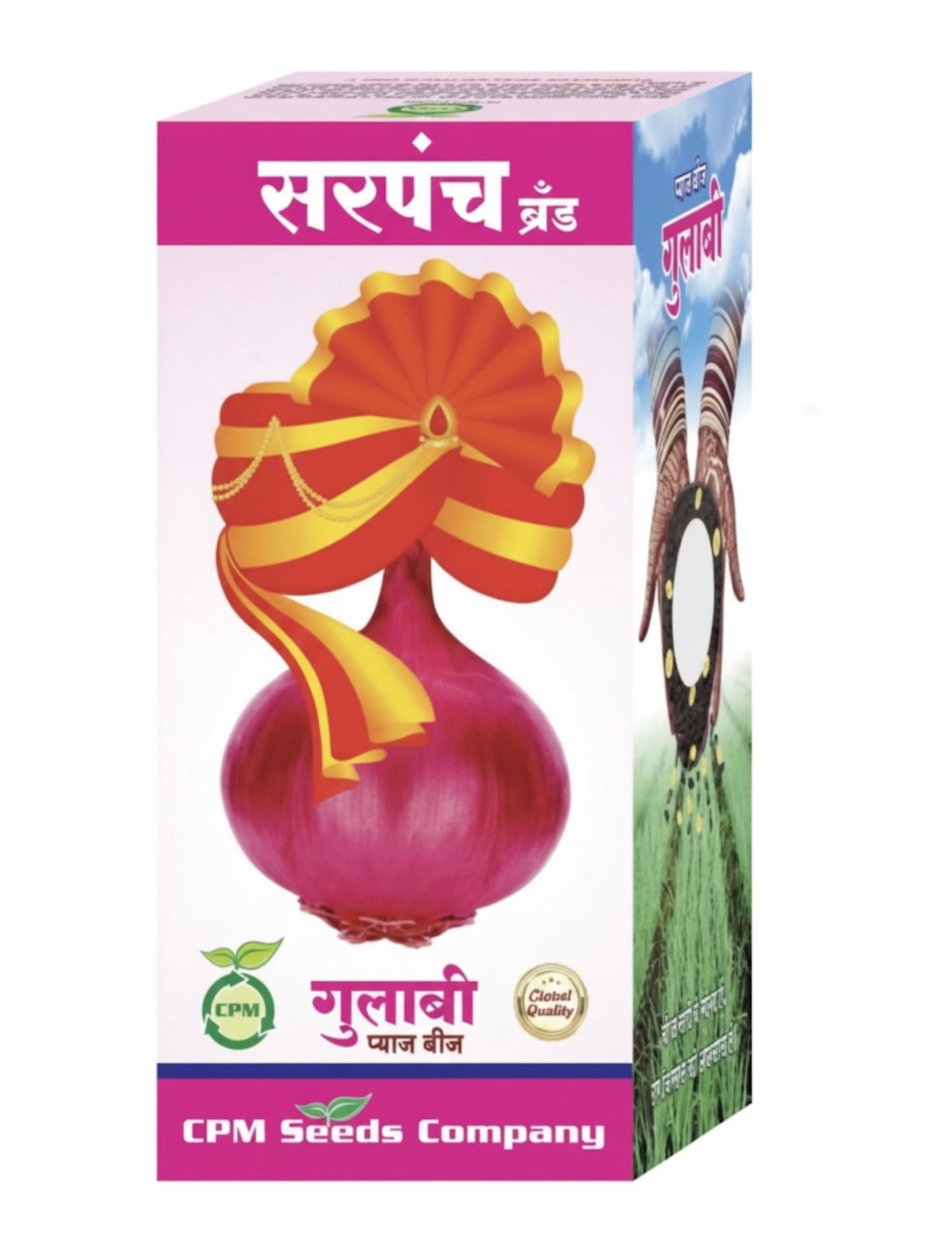
Sarpanch Gulabi Brand Onion Seeds – High-Yield Pink Onion Variety by CPM seeds
Sarpanch Gulabi Brand Onion Seeds – High-Yield Pink Onion Variety by CPM seeds
Weight
Couldn't load pickup availability
Sarpanch Gulabi Brand Onion Seeds – High-Yield Pink Onion Variety
Product Description
Sarpanch Gulabi Brand Onion Seeds are known for producing attractive pink-red, round bulbs that offer excellent market appeal and strong storage ability. This variety performs exceptionally well in Rangda, Rabi, and Late Rabi seasons, making it a reliable choice for farmers across different climates.
After harvest, the bulbs develop a bright, appealing pink-red color. The bulbs are round, uniform, and have very low double or split bulbs, ensuring maximum market-grade output. The neck of the bulb is thin to medium in thickness and dries evenly during the Rabi season, allowing for a smooth, single-stage harvest.
The crop matures in about 130 days after transplanting, and once fully dried, the onions turn a rich saffron-pink shade. This variety is tolerant to thrips/smoth moth, contributing to healthier crops and reduced losses. Under proper cultivation practices, farmers can achieve a yield of 42–45 tons per hectare.
Key Features
-
Suitable for Rangda, Rabi, and Late Rabi seasons
-
Attractive pink-red bulb color after curing
-
Round, uniform bulbs with low doubles and splits
-
Matures in ~130 days
-
7–8 months storage life after proper drying
-
Thin to medium neck that dries evenly
-
Tolerant to thrips (smoth moth)
-
Yield potential: 42–45 tons/ha
Seed Treatment
Before sowing, treat seeds with any one of the following at 3 g per kg:
Thiram, M-45, Roko, Bavistin, or Ridomil Gold.
Nursery Preparation & Sowing
-
Ideal soil: Rich in organic matter, sandy-loam to loamy soil with good drainage (pH 6.0–7.5)
-
Slight slope recommended for excess water drainage
-
Deep ploughing and harrowing reduce weeds and soil-borne fungal diseases
-
Common nursery diseases: Rhizoctonia, Phytophthora, Pythium, Fusarium
-
Seed rate: 8–10 kg per hectare
-
Seed treatment alternative: Captan or Carbendazim (2–3 g/kg)
-
Sowing depth: 1–1.5 cm
-
Row spacing: 5–7.5 cm
-
Cover seeds with fine compost and water lightly
-
For weed control:
-
Manual hoeing twice
-
Pendimethalin at 2 ml/L before seedling emergence
-
Pest & Disease Management
-
Major pest: Thrips/flower beetle
-
Control using Fipronil (5 SC) at 1 ml/L or Carbosulfan (25 EC) at 2 ml/L (with sticker in rainy season)
-
-
For black/brown rot:
-
Mancozeb at 2.5 g/L, 20 days after sowing
-
-
Apply NPK 19:19:19 and micronutrients based on deficiency or technical advice
-
Light watering 1–2 days before uprooting seedlings
-
Trim one-third of seedling tops before transplanting
-
Transplant seedlings at 40–45 days, spacing 15 × 10 cm
Fertilizer & Irrigation Management
-
Recommended nutrients per hectare:
-
Nitrogen: 150 kg
-
Phosphorus: 50 kg
-
Potassium: 80 kg
-
Sulfur: 50 kg
-
-
Apply one micronutrient bag (10 kg per acre) as required
-
Provide fertilizers within the first 60 days
-
Requires moderate but regular irrigation
-
Stop watering 2–3 weeks before harvest for proper bulb curing
- Easy Returns in 7 Days
- Standard Delivery